


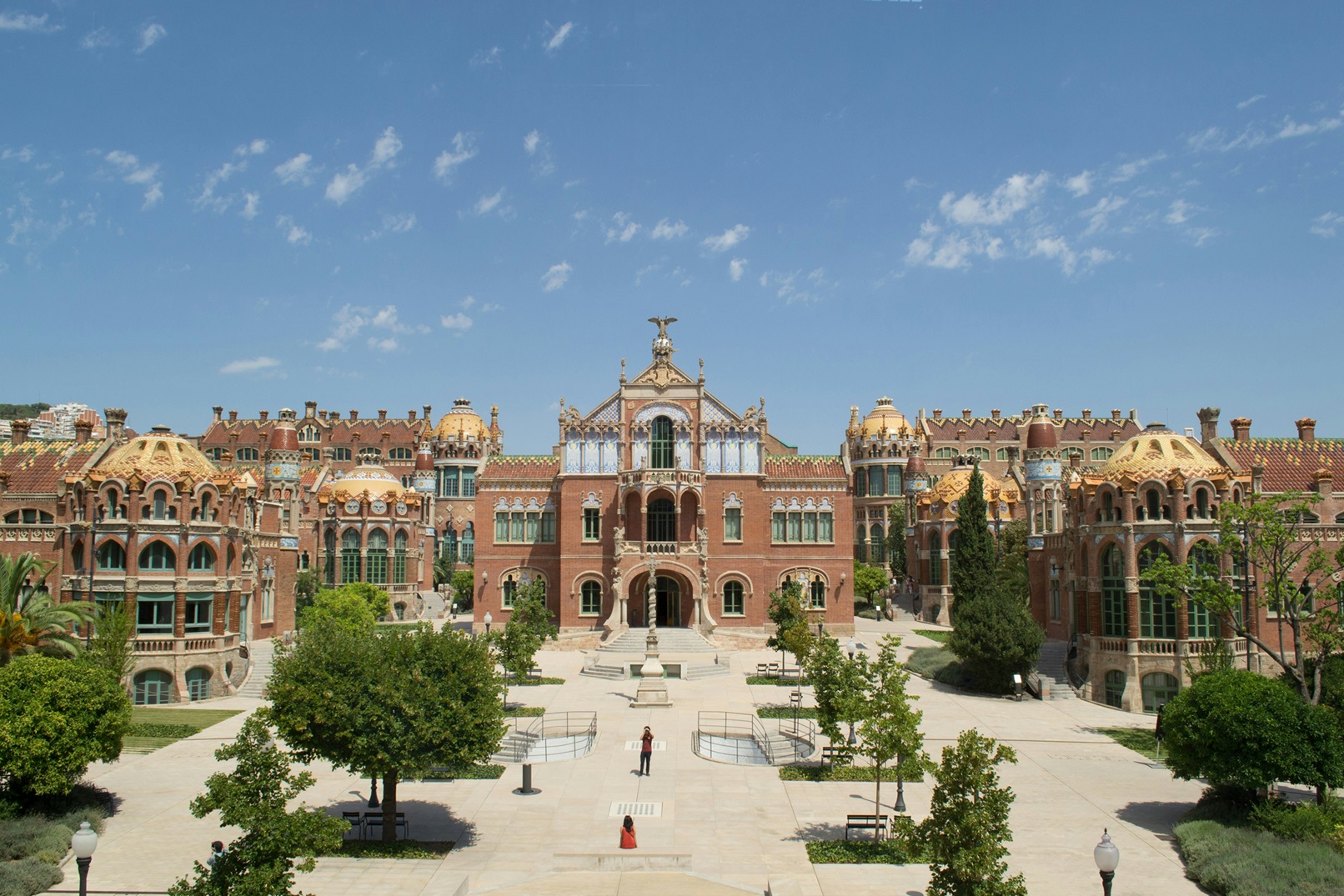
Sant Pau Hospital Barcelona: A Modernist Masterpiece of Healing and Architecture
The Hospital de Sant Pau in Barcelona is more than just a historic hospital. It is one of the world’s most beautiful examples of modernist architecture. Located just a short walk from the Sagrada Família, Sant Pau is a must-see destination for visitors who want to explore Catalan culture, art, and history.
This UNESCO World Heritage Site blends function and beauty in a way that was ahead of its time. Today, it stands as both a cultural landmark and a symbol of innovative healthcare design.
A Short History of Sant Pau Hospital
The story of Sant Pau begins in 1401. That year, several small hospitals in medieval Barcelona were merged to create the Hospital de la Santa Creu in the Raval neighbourhood. It became one of the oldest hospitals in Europe.
Over the centuries, the hospital served thousands of patients. But by the late 1800s, it was too small and outdated for a growing city. Barcelona needed a new, modern facility.
Pau Gil and a New Vision for Healthcare
The modern Sant Pau hospital was made possible thanks to a generous donation from Pau Gil, a Catalan banker living in Paris. When he died, he left funds to build a new hospital. His only request was that it carry the name of Saint Paul (Sant Pau) in honour of his patron saint.
His donation helped create a hospital that combined medical science with art, architecture, and nature. This was a bold idea at the time.
Designed by Domènech i Montaner
To bring this vision to life, the project was given to Lluís Domènech i Montaner, one of the leading architects of Catalan Modernism. He is also known for designing the Palau de la Música Catalana, another UNESCO-listed building in Barcelona.
Domènech believed that hospitals should be beautiful, not just functional. He designed Sant Pau as a place that would help patients heal in both body and mind.
Construction began in 1902 and continued until 1930. Sixteen separate buildings were built on a large site in the Eixample neighbourhood.
Modernist Design with a Purpose
Sant Pau Hospital was designed using the pavilion model. Each department was in a separate building, connected by underground tunnels. This layout helped reduce the spread of disease and allowed more natural light and air into each ward.
The buildings are made of red brick, colourful tiles, and stained glass. Intricate mosaics, sculptures, and domes make each pavilion unique. The central administration building is especially impressive, with grand staircases, arched ceilings, and detailed ornamentation.
This was more than decoration. Every element was designed with purpose—light, colour, air, and space were all seen as part of the healing process.
A Hospital Built for Well-Being
One of the most special aspects of Sant Pau was its focus on the patient experience. Domènech believed that a beautiful environment could improve health outcomes. So he designed spaces where patients could see the sky, walk in gardens, and enjoy art during recovery.
The hospital grounds were filled with trees, flowers, and fountains. Patients could rest in the open air and feel more human—even in times of illness.
This approach was revolutionary. Most hospitals at the time were dark, cold, and overcrowded. Sant Pau offered a completely different vision of healthcare.
Closure and Restoration
After more than 80 years in use, the hospital finally closed in 2009. Medical services were moved to a new, modern facility nearby. But the old buildings were not abandoned.
Instead, a major restoration project began. It took five years and over 100 million euros to fully restore the site. Experts cleaned the facades, repaired mosaics, and updated the interiors while respecting the original design.
In 2014, the site reopened as the Sant Pau Art Nouveau Site (Recinte Modernista de Sant Pau).
Sant Pau Today: A Cultural and Innovation Hub
Today, Sant Pau serves as a hub for culture, innovation, and learning. It regularly hosts exhibitions, guided tours, and cultural events, creating a dynamic environment for both locals and visitors. In addition, several of the restored pavilions now house offices for global organisations such as the World Health Organization and UN-Habitat.
As you explore the grounds, you’ll find beautifully restored buildings and peaceful gardens. Inside, various exhibitions showcase the history of medicine, architectural design, and the legacy of Domènech i Montaner. Moreover, visitors can walk through the underground tunnels, which offer a unique perspective on the site’s original layout.
Beyond its cultural role, Sant Pau also welcomes private events, including weddings, concerts, and conferences. As a result, it has evolved into a vibrant public space that continues to enrich the city in meaningful and modern ways.
How to Visit Sant Pau Hospital in Barcelona
If you’re visiting Barcelona, Sant Pau is easy to reach. It is located in the Eixample district, just a 10-minute walk from the Sagrada Família.
Getting there:
Metro: L5 (Sant Pau / Dos de Maig) or L4 (Guinardó / Hospital de Sant Pau)
Bus: H8, 19, 47, 117, 192
Visiting options:
Self-guided tours: Walk through the pavilions, gardens, and exhibitions at your own pace.
Guided tours: Learn more with expert commentary about architecture and history.
Opening hours: Generally open daily from morning to evening (check website for current hours).
Tickets: Affordable prices with discounts for students, seniors, and groups. Free entry on some public holidays.
Don’t miss:
The Administration Pavilion – with its spectacular dome, stained glass, and staircases.
The gardens – peaceful and well-maintained.
The mosaics and sculptures – especially in the interiors and façades.
The underground tunnels – connecting the pavilions like a secret world beneath.
Why Sant Pau Matters
The Hospital de Sant Pau is a place where art and healing come together. It’s a reminder that good design can improve lives. In many ways, it was a hospital ahead of its time—offering patients light, beauty, and dignity.
For lovers of architecture, history, or healthcare, Sant Pau is an inspiring example of what happens when creativity meets compassion.
Final Thoughts
Sant Pau Hospital in Barcelona isn’t just a tourist attraction—it’s a cultural landmark with deep historical roots and an even deeper message. It clearly shows how thoughtful architecture can support healing, not only physically but also emotionally and spiritually.
So, if you’re planning a visit to Barcelona, don’t end your tour at the Sagrada Família. Just a short walk away, Sant Pau offers a stunning and meaningful experience that’s well worth your time. You’ll discover one of the city’s most beautiful buildings.
Feeling inspired to explore Sant Pau Hospital and the cultural gems of Barcelona? After a day in the city, return to the peace and comfort of one of our luxury villas in the Sitges – just a short drive away. Contact us to find the perfect retreat for your Catalonia getaway.
